
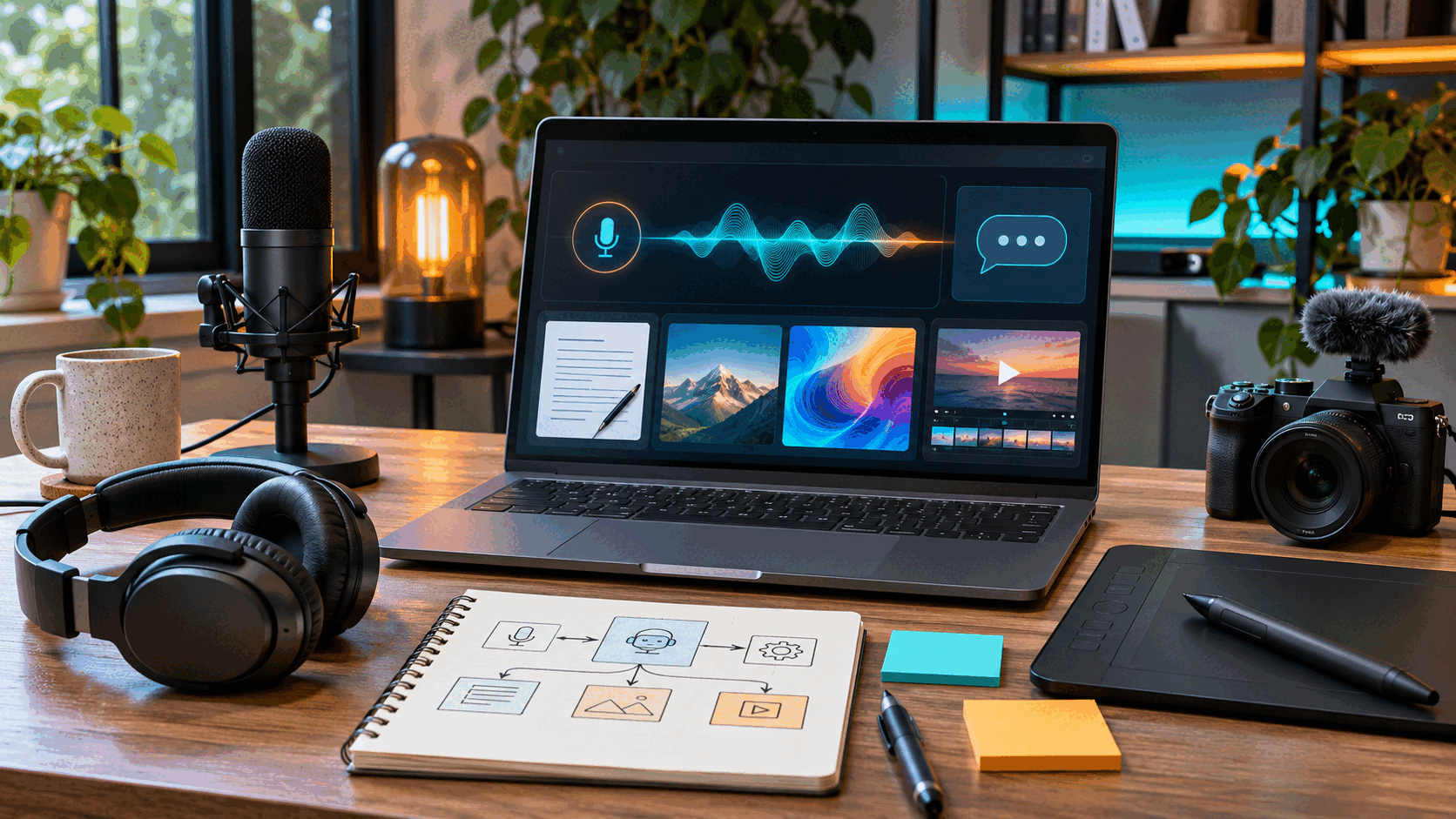
AI video tools can speed scripting, storyboards, captions, translation, cleanup, and visual generation. The right choice depends less on spectacle than on control, rights, accuracy, accessibility, and the ability to revise.
Define the Production Job
Separate ideation, scripting, storyboarding, generation, editing, captioning, translation, dubbing, cleanup, and distribution. One tool rarely excels at every stage. Write the target audience, message, duration, aspect ratio, required assets, brand rules, accessibility requirements, and approval steps. This prevents a flashy output from replacing the actual communication goal.
Turn the brief into a shot list before generating footage. Name the purpose, duration, framing, movement, dialogue, on-screen text, transition, and source for each shot. This makes continuity errors easier to identify and prevents repeated generation of clips that do not fit the edit. Lock the script and required facts before spending time on visual variations.
Run a Controlled Pilot
Use a short, low-risk video with known source material. Measure setup time, generation time, revision effort, export quality, caption accuracy, brand consistency, and cost. Test several rounds of edits because the first output is not the real workflow. Confirm that team members can reproduce the process and that projects remain editable if a vendor changes features.
During a pilot, count revision cycles and failed generations, not just the time to create the first clip. Check whether character appearance, wardrobe, product details, lighting, and camera direction stay consistent across shots. Export a project and verify that captions, audio stems, transparency, and resolution work in the editor your team actually uses.
Secure Rights and Consent
Inventory every input and output component: script, footage, image, music, sound effect, font, logo, voice, face, avatar, and generated clip. Record the source, license, consent, tool, and material edits. Do not assume a paid subscription clears third-party rights. Obtain appropriate permission before creating a digital replica or synthetic performance of a real person.
Consent should name the allowed project, channels, duration, territories, edits, languages, and whether a synthetic voice or likeness may be reused. A general appearance release may not address digital replicas. Keep revocation and takedown procedures where appropriate. Do not use scraped audio or public video as implied permission to clone a person.
Preserve Human Authorship
Human-written scripts, filmed performances, editing decisions, selection, arrangement, and substantial modifications can carry authorship. The Copyright Office evaluates AI-related copyright questions case by case and distinguishes human contribution from material generated without sufficient human control. Save drafts, timelines, source files, masks, keyframes, and notes that document creative choices.
Document human choices through scripts, storyboards, filmed elements, edit timelines, color work, sound design, and substantial revisions. Keep generated elements identified on the timeline. For registration or important licensing, consult current Copyright Office guidance and qualified counsel. Avoid promising clients exclusive rights that the production record and contracts do not support.
Prevent Deception
Label synthetic material when viewers could reasonably mistake it for a real event, statement, endorsement, or person. Verify quotes and claims, and never fabricate customer testimony, news footage, or evidence. Voice cloning and realistic avatars increase the need for consent and authentication. Trust lost through one deceptive clip can outweigh production savings.
Create a disclosure standard based on context. Fictional illustration may need different labeling than a synthetic executive statement, customer testimonial, or apparent news event. Add visible or accompanying disclosure where a reasonable viewer could be misled. Preserve content credentials or provenance metadata when the workflow and platform support them.
Finish for Real Viewers
Correct captions, names, punctuation, timing, audio levels, pronunciation, continuity, anatomy, logos, and on-screen text. Add audio description or transcripts when appropriate. Review horizontal, vertical, and square exports on actual devices. Keep a clean master and an accessible version. The final approval should come from a person who understands both the message and the rights involved.
Caption review must be done against the final audio. Correct names, technical terms, speaker changes, sound cues, and timing. Check flashing, rapid motion, small text, and contrast. Listen on headphones and ordinary phone speakers. A final mobile review often reveals clipped captions, unreadable graphics, and audio problems hidden by a desktop editing setup.
AI Video Creation Tools in Practice
For a product explainer, use accurate product footage for every feature claim and AI only for clearly illustrative transitions or backgrounds. Keep the interface, dimensions, and included components current. Have the product owner and legal or compliance reviewer approve the final claims. A generated demonstration should never show a capability that the real product does not have.
For a translated video, start from an approved transcript. Use a qualified reviewer for meaning, terminology, names, tone, and cultural context. If lip synchronization or a synthetic voice is used, obtain the required consent and label the adaptation where appropriate. Give viewers accurate captions even when the dubbed audio appears fluent.
For short-form repurposing, identify complete ideas rather than cutting only for dramatic hooks. Preserve necessary qualifications and context. Reframe graphics for vertical viewing, burn in reviewed captions when the platform requires them, and link to the full source. Automation can find candidate moments, but an editor should decide whether each excerpt represents the speaker fairly.
Review and Adjust
Screen the rough cut with the script, rights log, and disclosure standard beside it. Pause on every generated shot and verify continuity, products, locations, faces, hands, text, logos, and implied claims. Listen without watching to catch audio problems, then watch without sound to test captions and visual comprehension. Confirm that synthetic presenters and voices have documented consent. Reviewers should be able to request a precise change without forcing the team to regenerate the entire video unpredictably.
Before release, export every required ratio and inspect it on the target platform or device. Confirm caption safe zones, thumbnail accuracy, link destinations, audio levels, and compression. Archive the master, source files, consent, licenses, prompts where relevant, model or service version, and final approvals. After publication, monitor corrections and complaints. If a viewer could reasonably misunderstand synthetic content as a real event or statement, strengthen the disclosure or remove the misleading material rather than defending the technical process.
Putting the Guidance Together
The strongest AI video workflow is still a production workflow: brief, script, rights, consent, storyboard, edit, accessibility, factual review, and approval. Use generation where it saves real effort, but preserve human control and source records. Test the complete revision and export process before depending on the tool for a deadline. Keep the final approval record with the archived master file. A video that cannot be corrected, explained, or trusted is not finished, no matter how quickly it was created.
Frequently Asked Questions
What should I test first?
Test a short video that uses approved assets and requires several revisions. This reveals control, editability, caption quality, and actual production time.
Can I clone an employee or celebrity voice?
Do not clone a real person’s voice or likeness without appropriate authorization and a clear, non-deceptive use. Legal requirements can vary, so obtain advice for commercial projects.
Does paying for a tool guarantee ownership?
No. Review the service terms, source licenses, consent, and third-party rights. Payment alone does not resolve every copyright, trademark, privacy, or publicity issue.
Sources and Further Reading
Related MTDLN reads: AI-Powered Writing Assistants · Ethical Concerns Around AI · Repurposing Content Across Platforms