
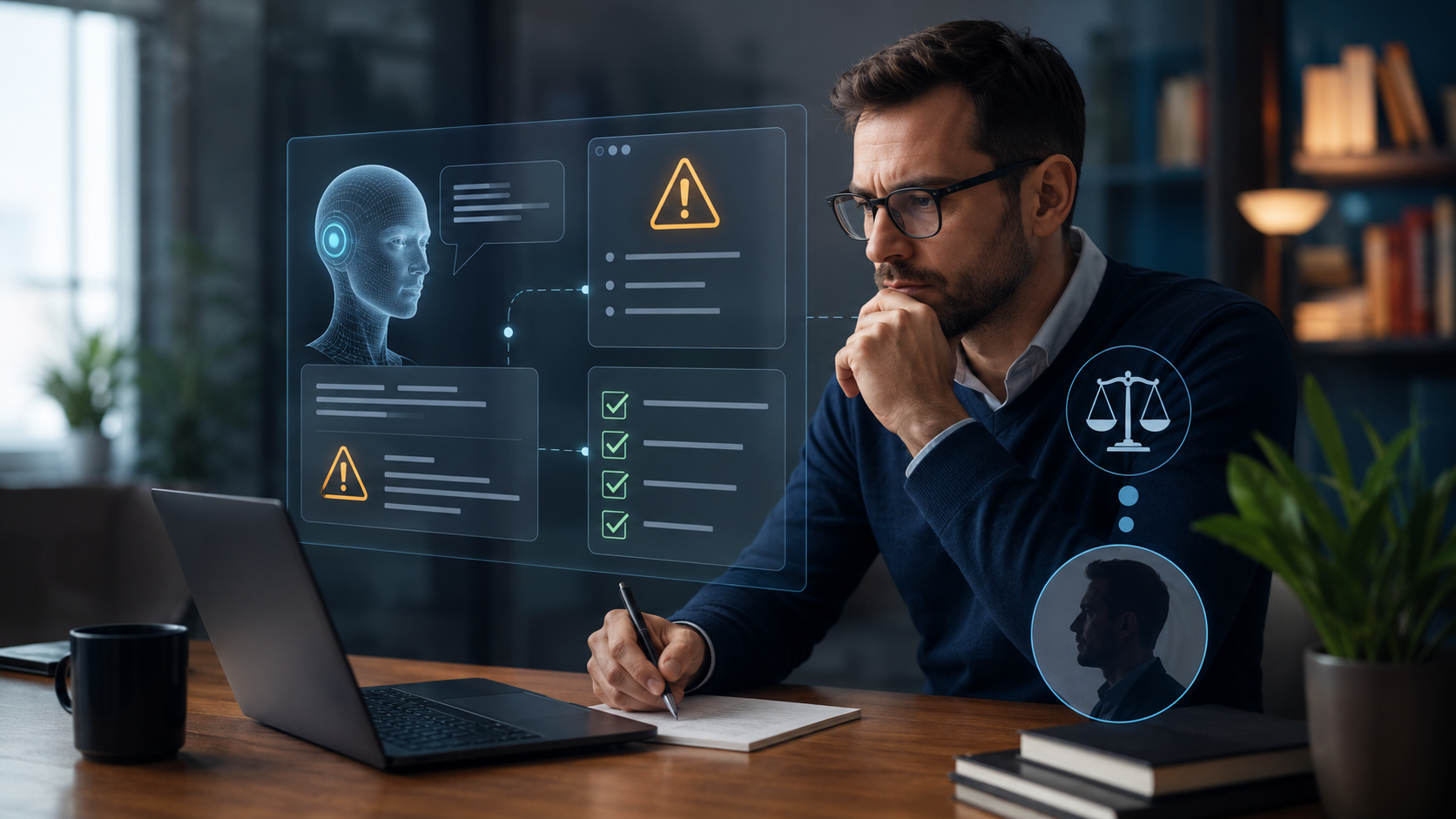
Artificial intelligence can help people analyze information, automate repetitive work, generate drafts, detect patterns, answer questions, and make software more responsive. Those benefits are real. So are the ethical questions that appear when AI systems begin influencing decisions, handling sensitive information, or producing content that people may mistake for human judgment.
The useful way to think about AI ethics is not as a debate over whether technology is good or bad. The better question is what can go wrong in a specific use, who could be affected, who is responsible, and what safeguards are reasonable before the system is trusted.
Bias Can Be Hidden Inside Useful Systems
AI systems learn from data, examples, rules, and human choices about what should be measured. If those inputs contain historical bias, incomplete representation, or poor assumptions, the output can reproduce those problems at scale. The risk becomes more serious when AI is used in hiring, lending, health care, insurance, education, housing, law enforcement, or other areas where decisions can materially affect a person’s opportunities.
Bias does not always appear as an obvious offensive answer. It may show up as a model performing well for one population and poorly for another, a ranking system repeatedly favoring one type of candidate, or a dataset that leaves important groups underrepresented. Ethical use requires testing for uneven outcomes instead of assuming that automation is automatically neutral.
Privacy Becomes Harder When Data Is Easy to Process
AI can make enormous amounts of information easier to search, summarize, combine, and infer from. That creates value, but it also raises questions about consent and privacy. A person may have shared information for one purpose without expecting it to be reused for model training, profiling, prediction, or automated decision-making.
Organizations using AI should understand what information is entering the system, where it is stored, who can access it, and whether sensitive material is being exposed to a tool that was never approved for that purpose. Convenience is not a substitute for data governance.
Transparency Matters When AI Influences a Decision
People do not need a technical lecture every time software uses machine learning, but they should not be misled about how an important decision was made. If an automated system materially affects a person, there should be a reasonable way to understand what role the system played and how to challenge an obvious mistake.
Transparency is also important in generated media. Synthetic text, audio, images, and video can be useful creative tools, but they can also be used to imitate people, manufacture evidence, or create false impressions of events that never happened. Ethical practice should consider when disclosure is necessary to prevent deception.
Accountability Cannot Be Outsourced to the Model
One of the easiest ethical mistakes is treating the AI system as if it were the responsible party. A model does not approve a loan, publish an accusation, reject a job applicant, or send a medical instruction by itself. People and organizations choose how the system is deployed, what authority it receives, and whether its output is checked.
That means “the AI said so” is not a sufficient explanation when the stakes are high. Responsibility has to remain with identifiable people who can review the process, correct errors, and change the system when it produces harmful results.
Misinformation Can Be Produced Faster Than Verification
Generative systems can produce convincing material quickly, including material that is incomplete, inaccurate, fabricated, or stripped of important context. The ethical risk is not only that a model can be wrong. It is that polished language can make a wrong answer feel more certain than it deserves.
Publishers, businesses, educators, and professionals using AI therefore need verification standards appropriate to the consequences. A brainstorming mistake may be harmless. A false financial claim, fabricated quotation, incorrect medical instruction, or invented allegation about a real person can create serious harm.
Labor and Creative Work Raise Questions About Fairness
AI can increase productivity, but it can also change jobs, alter what skills are valued, and create pressure to replace human work without considering quality or long-term consequences. Creative industries face additional questions about training data, attribution, compensation, imitation, and whether a generated work is being presented in a way that unfairly exploits another person’s identity or style.
There is no single answer for every industry. Ethical adoption means looking beyond immediate cost savings and considering what happens to workers, customers, creators, and the quality of the work after the automation is introduced.
Security and Misuse Belong in the Ethics Conversation
A capable tool can be used responsibly or irresponsibly. AI can help defenders analyze threats, but it can also lower the effort required to create convincing phishing messages, impersonation attempts, fraudulent content, or other abuse. Systems that can act on behalf of users raise additional concerns when they are allowed to send messages, move money, modify records, or interact with external services.
Responsible deployment includes limiting permissions, logging important actions, separating testing from production, and requiring human approval for decisions that should not be fully automated.
Human Oversight Is a Design Choice
Human oversight does not mean placing a person at the end of a process who automatically clicks approve. It means designing a workflow where people have enough information, authority, time, and expertise to recognize when intervention is necessary. Oversight should be strongest where the consequences of error are greatest.
The ethical goal is not to slow useful technology simply because it is new. It is to make sure speed and convenience do not remove responsibility. The most mature AI systems will not be the ones that eliminate humans from every decision. They will be the ones that make clear where automation helps, where judgment still matters, and who remains accountable when the system affects real people.