
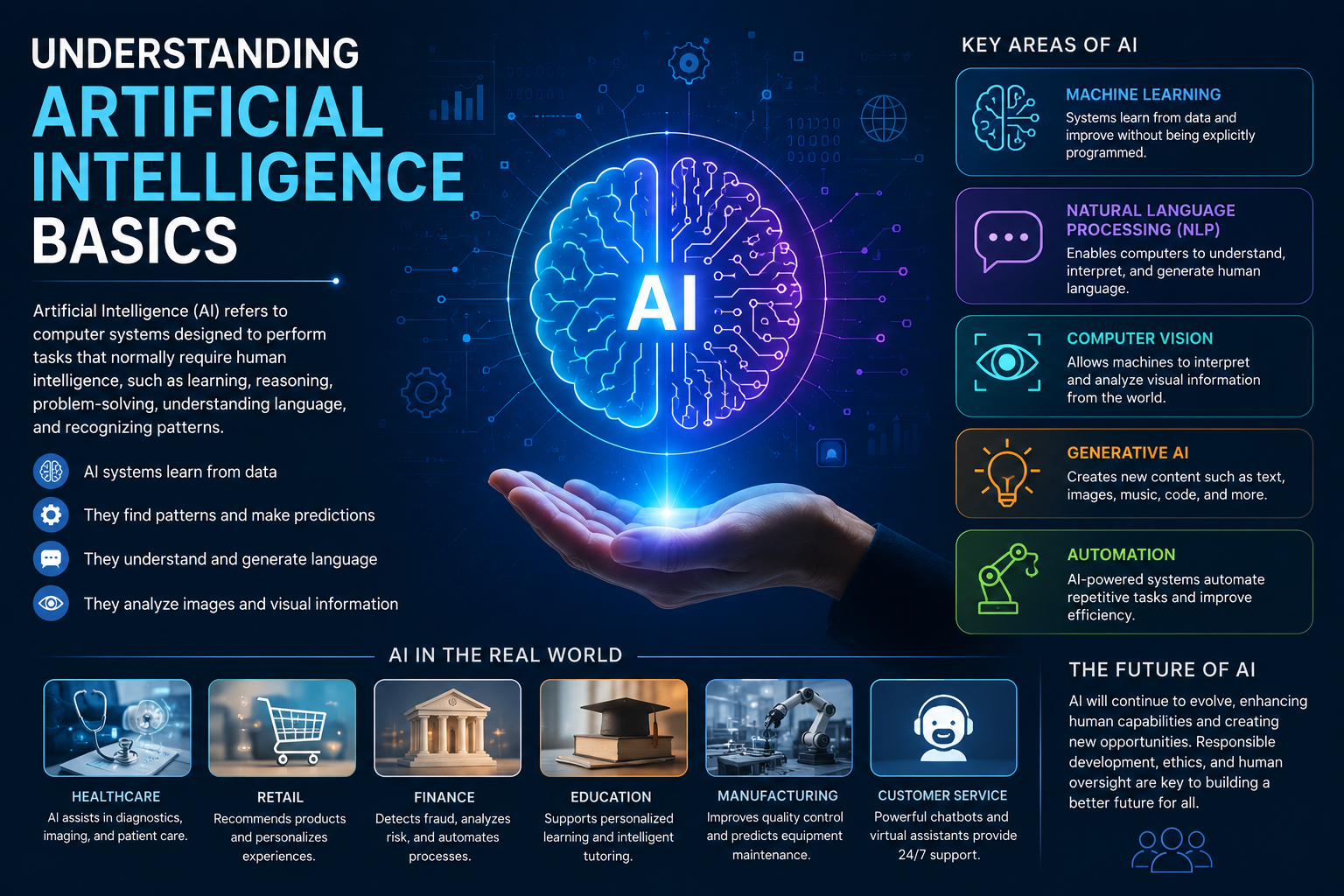
Artificial Intelligence (AI) is transforming industries across the globe, from healthcare to finance to entertainment, enabling innovations that were once considered impossible. But AI’s potential is not just driven by advanced algorithms and neural networks; it is powered by data. More specifically, big data serves as the fuel for AI systems, providing the vast amounts of information needed to train, refine, and optimize these technologies. In this article, we will explore the role of big data in fueling AI, examining its impact, challenges, and future potential.
1. Understanding Big Data and Artificial Intelligence
To understand the synergy between big data and AI, it's essential to define both terms and explore their interrelationship.
- Big Data refers to extremely large datasets that cannot be processed or analyzed using traditional data processing tools. Big data is often characterized by the “three V’s”: Volume (the vast amount of data), Velocity (the speed at which data is generated and needs to be processed), and Variety (the different types of data structured, unstructured, and semi-structured).
- Artificial Intelligence involves creating machines or software that can simulate human intelligence processes, such as learning, reasoning, problem-solving, perception, and language understanding. AI systems are typically powered by algorithms, including machine learning (ML) and deep learning, which require large datasets to function effectively.
The relationship between big data and AI is symbiotic. AI models require large, high-quality datasets to train, while big data technologies provide the infrastructure and tools to store, manage, and analyze that data at scale.
2. The Symbiosis of Big Data and AI
AI systems rely on data to make decisions, predictions, and improvements. Machine learning, a subset of AI, is a process where algorithms are trained on large datasets to identify patterns and make predictions. These algorithms improve over time as they are exposed to more data, leading to more accurate results.
Big data provides the essential raw material for this training process. AI systems require access to diverse datasets to ensure they are robust, reliable, and capable of performing in real-world situations. Whether it’s self-driving cars, personalized healthcare recommendations, or chatbots, AI systems rely on big data to function and improve continuously.
For example, in the case of autonomous vehicles, AI needs massive amounts of data to learn to recognize and respond to different driving scenarios, including identifying pedestrians, other vehicles, road signs, weather conditions, and more. This data is collected in real-time from a variety of sources, including cameras, sensors, GPS, and traffic monitoring systems. Without big data, AI would lack the information needed to make intelligent, real-time decisions on the road.
3. Big Data Enhances Machine Learning
Machine learning algorithms improve over time as they are exposed to larger and more diverse datasets. Big data helps facilitate this continuous improvement, enhancing the performance of machine learning models in several ways.
- Training Machine Learning Models: One of the primary functions of big data is to provide the large, diverse datasets required to train machine learning models. The more data an AI system can process, the better it can learn and generalize from that data, leading to more accurate predictions or decisions.
- Improving Model Accuracy: In machine learning, the ability of a model to generalize well to new data is essential. With access to vast amounts of data, AI systems can identify nuanced patterns and correlations that might not be visible in smaller datasets. This ability to capture subtle relationships improves the model’s overall accuracy, reducing bias and enhancing its effectiveness.
- Continuous Learning: AI systems built on machine learning are not static; they are capable of learning and evolving over time. With big data, AI can continue to refine its models by learning from new, incoming data, leading to continual improvements and adaptation. For instance, AI-driven recommendation systems such as those used by Netflix or Amazon constantly adjust their algorithms based on new user behavior, ensuring more accurate and relevant recommendations.
4. Big Data in Deep Learning
Deep learning, a subset of machine learning that mimics the human brain's neural networks, has become one of the most promising approaches for solving complex problems, such as image recognition, natural language processing (NLP), and speech recognition. However, deep learning models are data-hungry, requiring massive datasets to achieve high levels of performance.
Big data is crucial for training deep learning models in the following ways:
- Large-scale Image and Video Processing: Deep learning has revolutionized computer vision, enabling machines to recognize and classify images and videos. Training deep learning models to achieve high accuracy requires access to large datasets of labeled images or video data. For example, self-driving cars use deep learning algorithms to process video feeds from cameras and identify objects in the car’s surroundings. These models need access to millions of images or videos for training.
- Natural Language Processing (NLP): NLP involves training machines to understand and generate human language. Big data plays a vital role in this field, as models need vast amounts of text data to learn patterns in grammar, syntax, semantics, and context. Large-scale text corpora such as news articles, books, and social media posts help train AI models for applications like virtual assistants, translation services, and sentiment analysis.
- Speech Recognition: Deep learning is also widely used in speech recognition technologies. AI-powered virtual assistants like Siri, Alexa, and Google Assistant rely on deep learning algorithms to convert speech into text. To accurately recognize a wide range of accents, dialects, and speech patterns, these models require access to enormous amounts of audio data.
5. Big Data Technologies Supporting AI
The infrastructure and tools that enable big data processing play an integral role in enabling AI. Several technologies and platforms have emerged to help organizations handle and process big data effectively, ensuring that AI systems can leverage these datasets.
- Cloud Computing: Cloud platforms like Amazon Web Services (AWS), Google Cloud, and Microsoft Azure provide the scalability required for storing and processing large datasets. These platforms allow businesses to run AI models on large-scale datasets without the need for extensive on-premise hardware infrastructure.
- Data Lakes: Data lakes provide a central repository where organizations can store vast amounts of unstructured and structured data. They allow AI systems to access and analyze data from multiple sources without the need for data transformation or cleansing. Data lakes are essential for AI projects involving large volumes of diverse data, such as social media posts, video feeds, and sensor data.
- Distributed Computing: Big data processing often involves handling datasets too large to be processed by a single machine. Distributed computing frameworks like Hadoop and Apache Spark enable the parallel processing of massive datasets across multiple servers, improving efficiency and reducing processing time.
- Data Integration Tools: AI systems often require data from multiple sources, including databases, sensors, social media, and the internet of things (IoT). Big data integration tools help combine, cleanse, and process this diverse data, ensuring that AI models have access to accurate and relevant information.
6. Challenges of Using Big Data in AI
While the marriage of big data and AI holds immense potential, it also presents several challenges that need to be addressed to maximize the benefits of these technologies.
- Data Quality: The effectiveness of AI systems depends not just on the volume of data but on the quality of that data. Inaccurate, incomplete, or biased data can lead to flawed AI models, resulting in incorrect predictions or decisions. Ensuring data quality is essential for maintaining the reliability of AI systems.
- Data Privacy and Security: The use of big data in AI raises concerns about privacy and security. AI models often require access to personal and sensitive data, such as health records or financial information. Ensuring that data is protected from breaches and misuse is critical, particularly with the growing emphasis on privacy regulations such as the General Data Protection Regulation (GDPR).
- Bias in Data: AI models are susceptible to biases present in the data they are trained on. If the data used to train an AI system is skewed or unrepresentative, the AI may develop biased decision-making patterns. For instance, biased data can lead to discriminatory practices in hiring algorithms or predictive policing. Addressing bias in big data is an ongoing challenge in AI development.
- Scalability: As the volume of data continues to grow, managing and scaling AI systems becomes increasingly complex. AI models need to be designed to handle ever-larger datasets efficiently, and organizations need to invest in the infrastructure to support these scalable systems.
7. The Future of Big Data and AI
The future of AI is closely tied to the continued evolution of big data. As technology advances, new types of data such as genomic data, satellite imagery, and data from emerging technologies like 5G and IoT will provide even more opportunities for AI to revolutionize various fields.
Furthermore, the integration of AI with big data will lead to advancements in areas such as:
- Personalized Medicine: AI-driven analysis of big data will enable more personalized healthcare treatments, using genetic, medical, and lifestyle data to predict and prevent diseases before they occur.
- Smart Cities: AI will play a crucial role in developing smart cities, using data from sensors and devices to optimize traffic flow, reduce energy consumption, and improve public services.
- Automation: AI-powered automation will continue to transform industries, with big data providing the insights needed to streamline processes, increase efficiency, and reduce costs.
Big data and artificial intelligence are inextricably linked, with big data serving as the foundation upon which AI thrives. From machine learning to deep learning, big data provides the diverse, high-quality datasets required to train AI models and help them evolve over time. As technology continues to advance, the relationship between big data and AI will only become stronger, unlocking new possibilities and transforming industries worldwide. However, to fully realize the potential of this dynamic duo, organizations must address the challenges of data quality, privacy, security, and bias while ensuring that AI systems remain transparent, ethical, and accountable.