
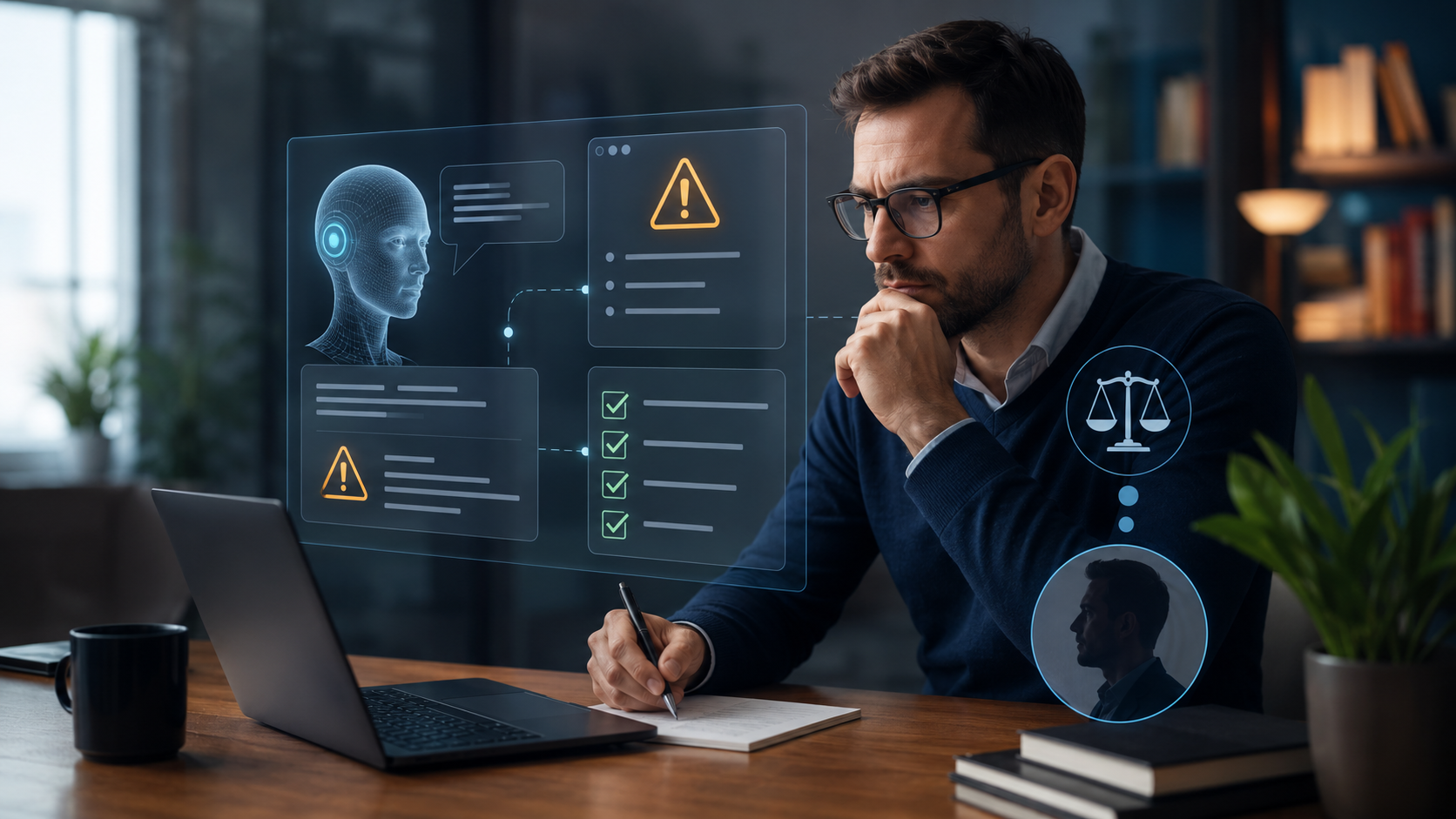
Artificial intelligence is changing workplaces one task at a time. In many offices, the first visible shift is not a robot replacing a department. It is a worker using an AI assistant to summarize a long document, draft a routine email, compare options, turn notes into an outline, search internal information, create code, analyze data, or produce a first version of something that used to take longer.
That distinction matters. Jobs are bundles of tasks. When technology changes some of those tasks, the job can be redesigned before it disappears. The result is a workplace where speed increases, expectations change, and employees are asked to spend less time on certain forms of production and more time checking, deciding, communicating, and applying judgment.
Automation Is Moving Into Knowledge Work
Older automation was easiest to see in factories, warehouses, and transaction processing. Generative AI can work with language, images, code, audio, and large collections of information, which brings automation into professions that once seemed insulated. Marketing teams can create variations faster. Customer-service teams can draft replies. Developers can generate and review code. Analysts can summarize documents and create first-pass comparisons. Administrative teams can automate routine communication and documentation.
That does not mean the systems are reliable enough to operate without oversight. AI can produce confident mistakes, miss context, mishandle sensitive information, or repeat bias from its data and instructions. The more important the decision, the more the workplace needs clear rules about review, accountability, privacy, and when a human must make the final call.
The Worker Who Uses AI May Replace the Workflow That Did Not
In many roles, the competitive pressure comes from productivity rather than direct replacement. A person who can use AI well may complete the same routine work faster, which changes staffing assumptions and performance expectations. A five-person process may become a three-person process, or the same five people may be expected to produce more. Companies may reinvest that saved time in growth, or they may reduce headcount. Both outcomes are possible.
The World Economic Forum's Future of Jobs Report 2025 found that employers expect major job and skill disruption through 2030. The report projects large numbers of jobs both created and displaced, and says nearly 40 percent of key skills are expected to change. It also reports that 77 percent of surveyed employers plan to upskill workers in response to AI, while 41 percent expect workforce reductions where AI automates tasks.
Human Skills Are Becoming More Valuable, Not Less
As routine production gets easier, the value of judgment becomes more visible. Someone still has to decide what question to ask, whether the answer makes sense, which tradeoff matters, what a customer actually needs, how a policy applies to a messy situation, and when a generated recommendation should be rejected. Communication, domain expertise, leadership, empathy, negotiation, critical thinking, and responsibility do not disappear because software can create a polished draft.
The WEF report likewise places creative thinking, resilience, flexibility, curiosity, lifelong learning, leadership, and analytical thinking among skills expected to rise in importance. Technical literacy matters, but the workplace advantage is increasingly a combination of technical and human capability.
Managers Are Being Forced to Redesign Work
AI adoption is not simply an employee-tool decision. Managers must decide which processes can safely change. That means mapping workflows, identifying repetitive steps, protecting confidential information, setting approval thresholds, documenting acceptable tools, and measuring whether automation actually improves quality instead of merely increasing volume.
A useful AI policy answers practical questions. What information may employees enter into outside systems? Which outputs require review? Can AI be used for hiring, performance evaluation, or customer decisions? Who is responsible when generated information is wrong? How are source materials retained? Without those rules, employees either avoid useful tools or use them inconsistently and create unnecessary risk.
Entry-Level Work May Change the Most
Many careers traditionally taught new employees through repetitive work: summarizing documents, building first drafts, doing basic research, preparing standard reports, or handling routine requests. If AI absorbs much of that work, organizations need a new way to train beginners. A junior employee cannot become a strong reviewer without first learning what good work looks like.
That may lead to more structured apprenticeships, simulation, supervised review, and earlier exposure to higher-level decisions. It may also increase the importance of portfolios and demonstrated skills because employers will have less reason to hire someone only for basic production work.
The Safest Career Strategy Is Task Awareness
Workers do not need to predict which occupations will exist ten years from now. A better question is which tasks in their current job are repetitive, rules-based, language-heavy, data-heavy, or easy to verify, and which depend on relationships, physical work, specialized judgment, trust, or accountability. The first group is more likely to be assisted or automated sooner.
Then learn the tools that affect your field, but do not stop at prompting. Learn how to verify output, protect data, integrate AI into a workflow, measure results, and recognize when it should not be used. The most durable skill is not knowing one particular AI product. It is being able to adapt as tools change.
Work Is Being Rewritten, Not Finished
AI will eliminate some tasks and roles, create others, and change many more. Different industries will move at different speeds because the economics, regulation, risk, and physical requirements are different. A hospital, construction company, law office, call center, software firm, and restaurant cannot adopt AI in the same way.
The workplace shift is therefore less about a single prediction and more about continuous redesign. Employees who understand their work deeply and can use new tools responsibly will be positioned differently from those who either ignore the technology or trust it blindly. The future of work will still require people. The work those people are asked to do, and the standards by which it is measured, are already changing.