
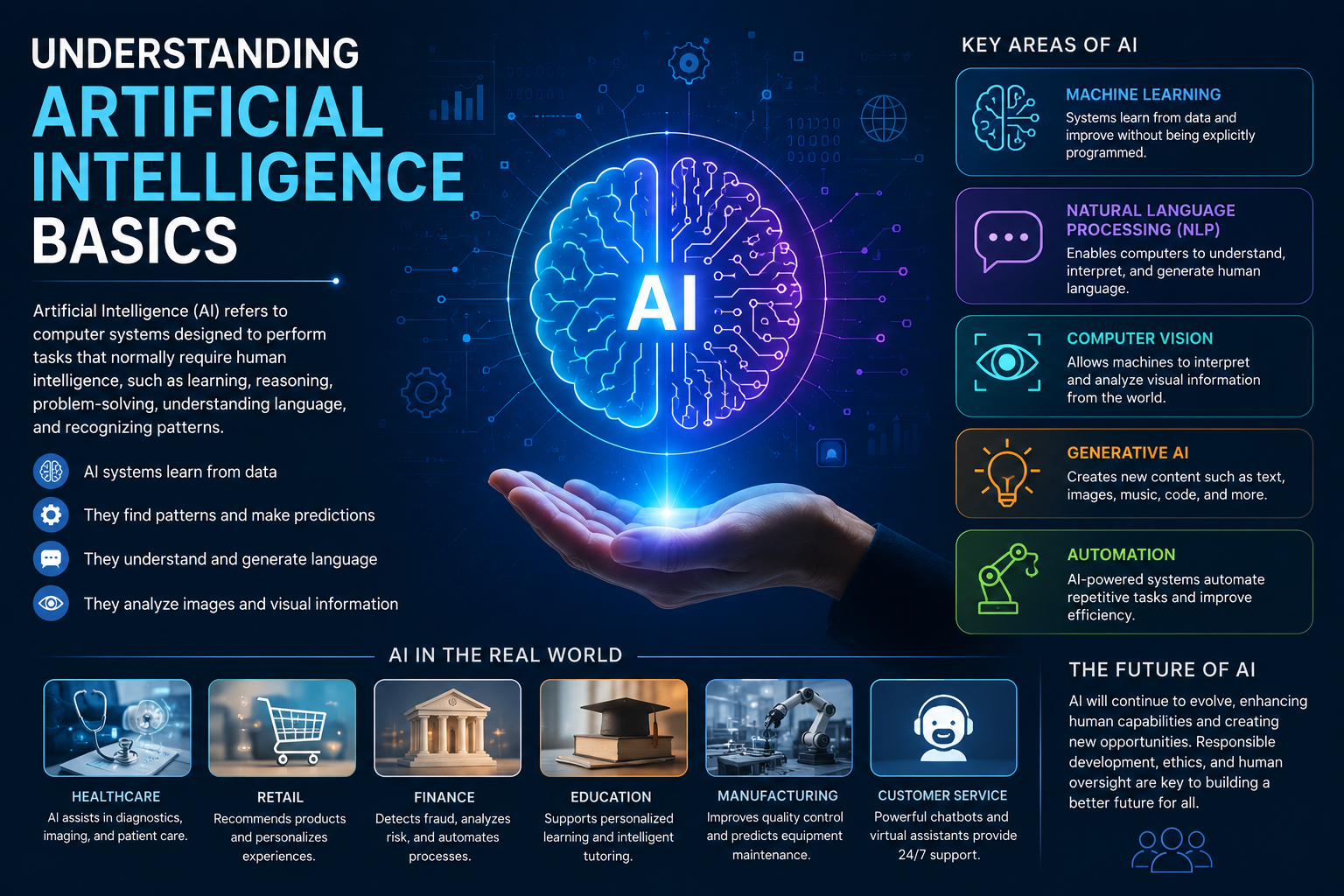
Artificial intelligence has rapidly transitioned from a futuristic concept into an everyday reality. Once associated primarily with science fiction and advanced research laboratories, AI now influences how people communicate, shop, work, learn, travel, and entertain themselves. Many individuals interact with artificial intelligence dozens or even hundreds of times each day without fully realizing it. As technology continues advancing, AI is becoming increasingly integrated into daily life across nearly every industry.
One of the most common applications of AI appears in digital assistants and voice recognition systems. Smartphones, smart speakers, and connected devices use artificial intelligence to understand spoken language, answer questions, set reminders, control home devices, and perform online searches. Voice assistants continuously improve through machine learning, allowing them to better recognize accents, preferences, and speech patterns over time.
Streaming platforms also rely heavily on AI technology. Services such as video streaming apps and music platforms analyze user behavior to recommend content based on viewing history, interests, and preferences. These recommendation systems help personalize experiences while increasing engagement and retention.
Online shopping is another area transformed by artificial intelligence. E-commerce websites use AI to suggest products, predict purchasing behavior, personalize advertisements, and optimize inventory management. Recommendation engines analyze browsing patterns and previous purchases to create highly targeted shopping experiences.
AI also plays a major role in navigation and transportation. GPS systems use artificial intelligence to calculate optimal routes, predict traffic conditions, and estimate arrival times. Ride-sharing platforms rely on algorithms to match drivers with passengers efficiently. Advanced driver-assistance systems in modern vehicles use AI to improve safety through lane detection, adaptive cruise control, and collision warnings.
Healthcare has experienced significant advancements through AI integration. Artificial intelligence assists doctors in diagnosing diseases, analyzing medical images, predicting patient risks, and improving treatment planning. AI-powered wearable devices can monitor heart rates, sleep patterns, and physical activity, helping users better understand their health.
Financial services increasingly depend on artificial intelligence as well. Banks and payment platforms use AI to detect fraudulent activity, evaluate credit risk, automate customer service, and analyze spending habits. Personal finance apps now provide budgeting insights, savings recommendations, and investment suggestions using intelligent algorithms.
Customer service has changed dramatically using chatbots and virtual assistants. Many businesses now use AI-powered systems to answer common questions, process simple requests, and provide support around the clock. While human representatives remain important for complex issues, AI helps improve response times and reduce operational costs.
Education is another field experiencing rapid AI adoption. Learning platforms use artificial intelligence to personalize educational experiences based on individual progress and learning styles. AI tools can generate quizzes, explain concepts, translate languages, and provide tutoring assistance for students worldwide.
Artificial intelligence also influences social media more than many people realize. Algorithms determine which posts appear in news feeds, recommend friends or accounts to follow, and identify potentially harmful or inappropriate content. AI systems continuously analyze user interactions to maximize engagement and personalize experiences.
Smart home technology represents another growing application of AI. Thermostats learn temperature preferences, security cameras detect unusual activity, and lighting systems automate routines based on behavior patterns. These technologies aim to improve convenience, energy efficiency, and home security.
Workplaces increasingly rely on artificial intelligence for productivity and automation. AI can organize schedules, summarize documents, analyze data, automate repetitive tasks, and improve communication workflows. Businesses use AI-driven analytics to identify trends, forecast demand, and support decision-making.
Content creation has also been influenced by AI advancements. Writers, marketers, designers, and video creators now use AI tools for brainstorming, editing, image generation, transcription, and research assistance. While AI does not replace human creativity, it can significantly accelerate workflows and improve efficiency.
Cybersecurity has become another critical area for AI applications. Artificial intelligence helps identify suspicious behavior, detect malware, monitor network activity, and respond to security threats more quickly than traditional systems alone.
Language translation tools powered by AI have improved dramatically in recent years. Real-time translation services help people communicate across languages more effectively, supporting global business, travel, and collaboration.
Agriculture has benefited from artificial intelligence as well. Farmers use AI systems to monitor crop health, predict weather patterns, optimize irrigation, and improve harvest efficiency. These technologies help increase productivity while reducing waste and resource consumption.
Despite its benefits, AI also raises important ethical and social concerns. Privacy, data security, job displacement, misinformation, and algorithmic bias remain significant challenges. As AI systems become more powerful, society must balance innovation with responsible oversight and transparency.
Another important consideration involves digital literacy. As AI tools become more common, individuals need to understand how these systems work and how their data is used. Educating users about responsible technology use will become increasingly important in the years ahead.
The future of artificial intelligence will likely bring even deeper integration into daily life. Autonomous vehicles, advanced robotics, predictive healthcare systems, and highly personalized digital experiences are expected to expand significantly. Many industries will continue evolving as AI capabilities improve.
However, the human element remains essential. Artificial intelligence excels at processing information and identifying patterns, but human judgment, empathy, ethics, and creativity remain irreplaceable in many situations. The most successful applications of AI often combine technological efficiency with human oversight.
Ultimately, artificial intelligence is no longer a distant innovation reserved for experts and engineers. It has become a practical tool shaping modern life in countless ways. Understanding its everyday applications helps individuals adapt more confidently to a rapidly changing technological landscape while recognizing both the opportunities and responsibilities that accompany AI-driven progress.