MTDLN.comFive useful reads. One weekly edition.Subscribe Free

Weekly Newsletter

Your Weekly Guide to Thriving in the Digital Age

Vol. 2Issue No. 39September 25, 2026

MASTER WHAT'S NEXT.

Money moves. Marketing shifts. Technology accelerates. Health matters. Knowledge compounds.

MTDLN cuts through the noise with five smart, practical reads every week, built to help you make better decisions, spot opportunities, and stay ahead of what's changing.

Finance

Money · Planning · Small Business · Financial Know-How

The Snowball vs Avalanche Debt Methods

The debt snowball prioritizes the smallest balance for faster wins, while the debt avalanche attacks the highest interest rate first to reduce total interest cost. The best method is the one you can follow consistently.
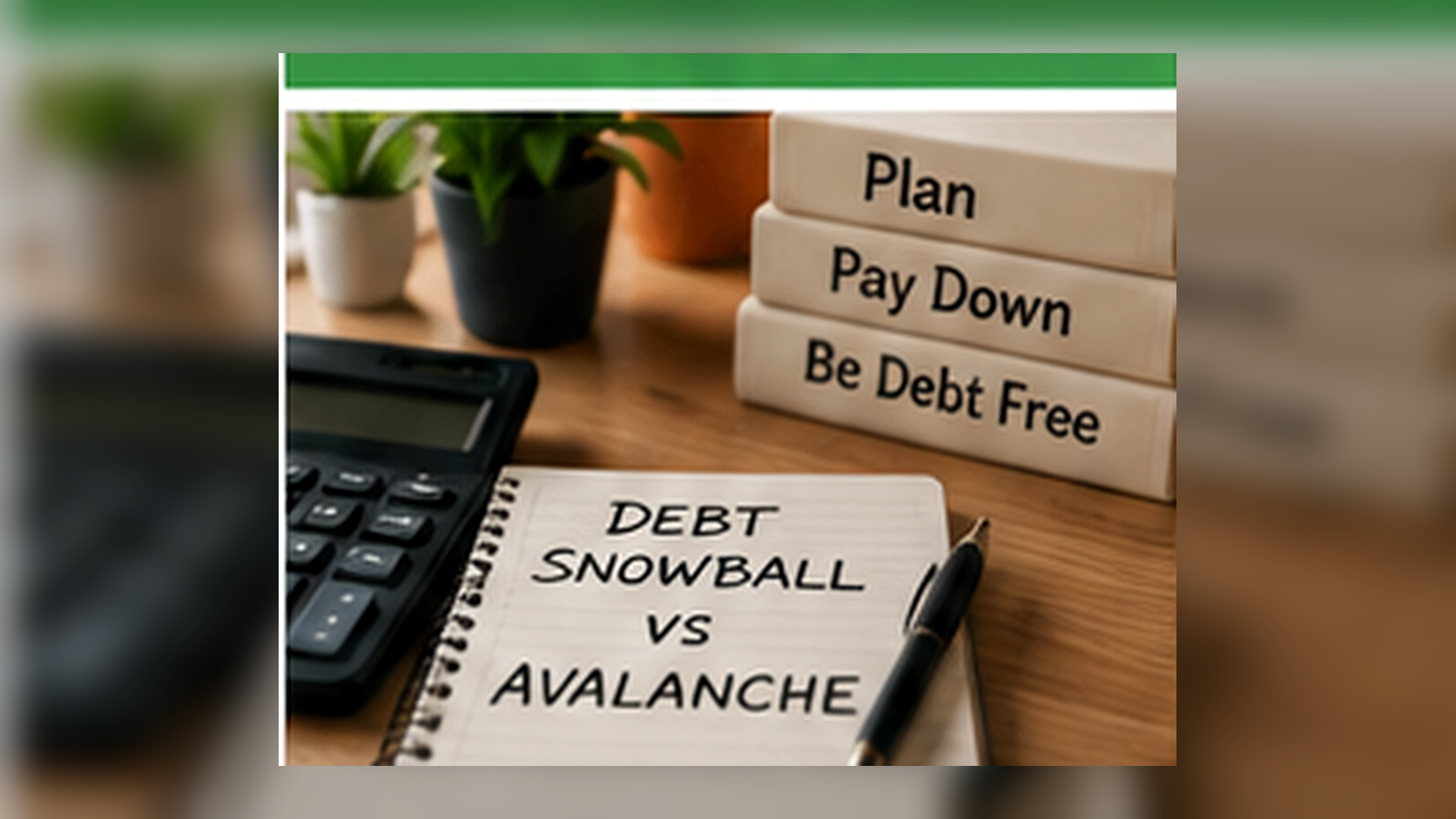
Debt payoff planning desk with a notebook comparing the snowball and avalanche methods, calculator, payment plan, and debt-free goal reminders.

When you are paying several debts at once, the hardest part can be deciding where extra money should go. The debt snowball and debt avalanche solve that problem in different ways. The snowball puts the smallest balance first so you can eliminate accounts quickly and build visible momentum. The avalanche puts the highest interest rate first so more of your money goes toward reducing the most expensive debt.

Both methods begin with the same rule: keep making the required minimum payment on every debt, then direct your extra payment to one target balance. When that balance reaches zero, roll the freed payment into the next target.

The CFPB recognizes the same trade-off. Smallest-balance repayment can produce quicker wins, while highest-interest repayment can save more money overall. That means the best method depends partly on what keeps you moving. If seeing accounts disappear helps you stay motivated, the snowball may be easier to follow. If interest savings matter most and you can stay committed without quick victories, the avalanche usually has the stronger mathematical advantage.

This week's Finance guide walks through both systems, a simple example, how to choose between them, when a hybrid approach can make sense, and why a small emergency reserve can help keep the payoff plan from collapsing when an unexpected expense appears.

Whichever method you choose, write the payoff order down and keep the extra payment amount steady. When one balance disappears, move that payment immediately to the next target instead of absorbing it into ordinary spending. The system works because each completed debt increases the amount attacking the next one. If your budget is unstable, pair the payoff plan with a small emergency reserve and a realistic review of the spending or income problem that created the balances in the first place.

Read the Full Article →


Digital Marketing

SEO · Content · Email · Social · Audience Growth

Creating Blog Posts That Convert

A blog post converts when it solves the right problem, earns trust, guides the reader toward a useful next step, and makes that action easy to take without sacrificing the value of the content.

Content marketer reviewing a conversion-focused blog article on a laptop with notes for audience intent, useful content, calls to action, and performance tracking.

A blog post does not convert simply because it has a button at the bottom. Conversion begins with attracting the right reader, answering the right question, and creating enough trust that the next step feels useful rather than forced.

That starts with search and reader intent. Someone learning what a service is needs different information than someone comparing providers or deciding whether to buy. When the article matches that stage, the call to action can match it too. An informational article might point to a checklist or related guide. A decision-stage article may reasonably invite the reader to request a quote, book a consultation, or review a service page.

Google continues to emphasize helpful, reliable, people-first content, which is also sound conversion advice. Give the reader the best answer you can before asking for anything. Use clear headings, practical examples, useful internal links, and a destination page that actually delivers what the call to action promised.

This week's Digital Marketing article explains how to structure conversion-focused posts, place calls to action without overwhelming the content, reduce friction after the click, use proof appropriately, and measure the specific action each article was created to support.

Conversion also depends on what happens after the click. If the article promises a checklist, consultation, product, or deeper guide, the destination needs to continue the same conversation. A confusing form or unrelated landing page can waste the trust the article just earned. Measure the action that matters for that post, not only pageviews, and revisit high-potential articles when they attract relevant readers but fail to produce the next step you expected.

Read the Full Article →

Tech & AI

Artificial Intelligence · Software · Security · Emerging Tech

Automating Repetitive Tasks With AI

AI can help automate repetitive knowledge work such as sorting information, drafting routine messages, summarizing documents, classifying requests, and triggering workflows, but reliable automation still needs clear rules and human oversight.

AI automation workspace with a laptop, workflow checklist, assistant interface, and routine tasks being organized for review and completion.

AI automation becomes most useful when it handles boring, repeatable work instead of trying to replace every decision. Sorting incoming requests, summarizing documents, drafting routine messages, extracting information, and triggering follow-up tasks are all examples of processes that can benefit from an AI step.

The starting point should still be the workflow itself. Write down what triggers the task, what information is required, what decisions are routine, what exceptions occur, and where human review is needed. Automating a messy process can simply make the mess move faster.

Risk also matters. NIST's AI Risk Management Framework emphasizes managing AI across its lifecycle. In practical terms, that means sensitive, financial, legal, employment, safety, or customer-impacting workflows need stronger controls than a low-risk internal summary. Keep humans in the loop where accountability matters, protect confidential data, and design a fallback for uncertain outputs.

This week's Tech & AI article shows how to identify good automation candidates, combine AI with ordinary workflow tools, measure the actual time saved, and build one reliable process at a time instead of chasing automation for its own sake.

A practical example might begin with a customer message. AI can summarize it, classify the topic, extract the name and requested action, and prepare a draft response. Ordinary automation can then create a task and route it to the correct person. The important part is the review point. Low-risk preparation can run automatically, while anything involving commitments, money, private data, or consequential decisions should move to a responsible human before the workflow continues.

Read the Full Article →

Health & Wellness

Fitness · Nutrition · Healthy Living · Wellness

Walking for Better Overall Health

Walking is one of the simplest ways to add regular aerobic activity to everyday life. A consistent walking routine can support cardiovascular health, mobility, mood, endurance, and overall physical activity goals.

Adult walking briskly on a sunlit trail with supportive shoes, water bottle, and a simple step-by-step fitness routine in a natural setting.

Walking may be one of the least complicated ways to improve your activity level. It requires little equipment, can be adjusted to different fitness levels, and can fit into a lunch break, commute, evening routine, or social visit.

The CDC recommends that adults get at least 150 minutes of moderate-intensity aerobic activity each week, along with muscle-strengthening activity on at least two days. Brisk walking can count toward that aerobic target, and the weekly total can be broken into smaller chunks. That means you do not need a perfect 30-minute block before movement becomes worthwhile.

A sustainable walking routine starts with an amount you can repeat. For one person that may be ten minutes at a time. For another it may be thirty minutes several days a week. Pace, hills, duration, and frequency can all be adjusted gradually.

This week's Health & Wellness guide explains how to use the talk test for moderate intensity, build walking into routines you already have, progress without overcomplicating the plan, combine walking with strength work, and use step counts or fitness apps as feedback rather than as a judgment of whether the day was successful.

The routine also becomes easier when you remove friction. Keep walking shoes ready, choose familiar routes, and decide in advance when movement normally fits your day. Have an indoor or adaptive backup for bad weather or difficult conditions. Walking can be the aerobic foundation of a broader fitness plan, but it does not have to carry the whole load. Strength work, balance, mobility, sleep, hydration, and nutrition still matter as part of overall health.

Read the Full Article →

Education & E-Learning

Learning · Career Skills · Courses · Educational Technology

Choosing the Right Online Courses

The right online course matches a specific learning goal, has credible instruction, clear outcomes, a realistic workload, transparent costs, and a credential or skill value that fits what you actually need.

Online learner comparing course options on a laptop with notebooks labeled goals, cost, credibility, workload, and outcomes beside study materials.

Online learning gives you more choices than ever, but more choice makes course selection harder. A polished sales page does not tell you whether a program matches your goal, whether the instructor is credible, whether the workload fits your schedule, or whether the credential will matter where you need it.

Start with the outcome. Decide what you want to know or be able to do after the course. Then compare the curriculum with that goal. Review instructor qualifications, assignments, projects, total cost, access period, refund terms, and the real weekly time requirement.

If a program promises a degree, academic credit, licensing preparation, or a professional credential, verify recognition carefully. The FTC advises students to investigate accreditation and to confirm whether employers or other schools will recognize the program. Search the provider's name along with terms such as review, scam, or complaint when the stakes or price are high.

This week's Education & E-Learning guide provides a practical five-question test for choosing courses, explains when accreditation matters, shows how to evaluate certificates and reviews, and helps you avoid paying for a program that looks impressive but does not move you toward the outcome you actually want.

Before you enroll, compare two or three programs side by side. Write down the learning outcome, instructor background, course length, real weekly workload, total cost, refund policy, access period, and whether the credential matters to employers or schools in your field. That simple comparison makes marketing claims easier to separate from practical value. The right course should leave you with useful knowledge, demonstrated skill, or recognized progress toward a goal you already decided matters.

Read the Full Article →

Get MTDLN Weekly

Five practical articles every week covering money, marketing, technology, wellness, and learning.