
Modern SEO Basics: How Search Engine Optimization Works in 2026
This week’s Digital Marketing article brought to you by 24/7 PressRelease and VectorStock
Digital Marketing:
Search engine optimization, commonly known as SEO, has evolved dramatically over the past decade. What once focused heavily on keyword stuffing and technical manipulation has become far more centered on user experience, content quality, authority, and relevance.
Today, modern SEO is less about tricking search engines and more about helping search engines understand valuable content. Businesses, creators, publishers, and entrepreneurs who understand these changes are better positioned to build long-term online visibility.
At its core, SEO is the process of improving a website’s visibility in search engine results. When someone searches for information, products, or services online, search engines attempt to deliver the most relevant and trustworthy results possible.
The primary goal of SEO is to help your content appear higher in those search results for topics related to your business or niche.
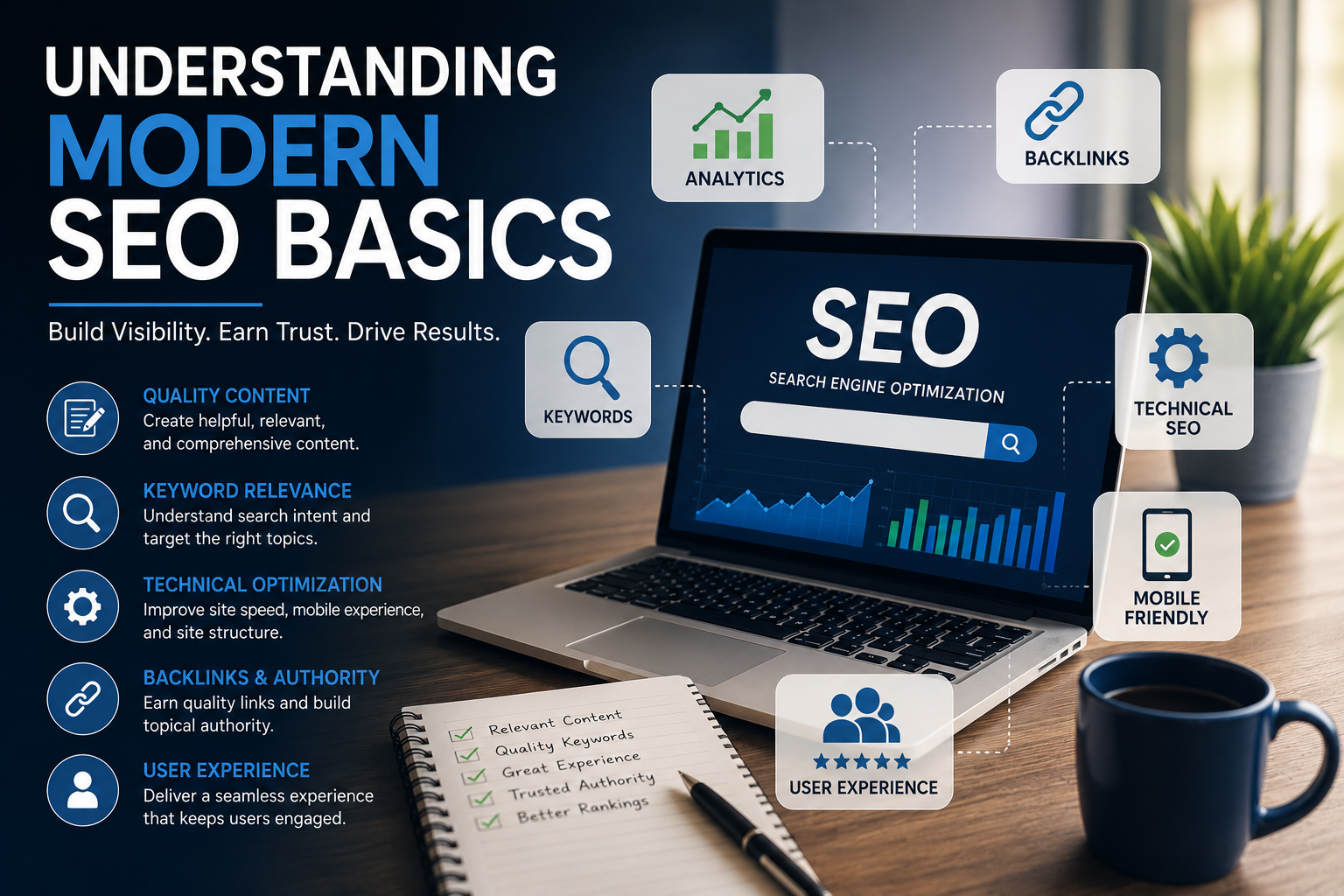
Modern SEO can generally be broken into several key areas: content quality, keyword relevance, technical optimization, user experience, backlinks, and authority.
Content remains one of the most important parts of SEO. Search engines prioritize pages that provide clear, useful, and comprehensive information. Thin content created solely to rank rarely performs well long term.
Instead of producing dozens of low-quality articles, modern SEO rewards depth, originality, and usefulness. Search engines analyze whether users engage with content, remain on pages, and find answers to their questions.
Keyword research still matters, but the approach has changed significantly. Years ago, exact keyword repetition was heavily emphasized. Today, search engines understand context, intent, and related topics much more effectively.
For example, an article about “healthy eating habits” may also rank for phrases related to nutrition, meal planning, fitness, and wellness because search engines recognize topical relationships.
This means content creators should focus on writing naturally while covering subjects thoroughly. Understanding search intent is especially important. Search intent refers to the reason behind a user’s search.
Some users want information. Others want to compare products. Some are ready to purchase immediately. Effective SEO content aligns with what users are actually trying to accomplish.
Technical SEO is another critical area. Even excellent content can struggle if a website loads slowly, functions poorly on mobile devices, or contains broken pages.
Modern websites should prioritize:
- Fast loading speeds
- Mobile responsiveness
- Secure HTTPS connections
- Clear site structure
- Easy navigation
- Proper indexing
- Optimized images
Search engines increasingly prioritize user experience because they want users to have positive interactions with websites.
Mobile optimization has become especially important because a large percentage of internet traffic now comes from smartphones and tablets. Sites that function poorly on mobile devices often lose both rankings and visitors.
Backlinks remain a major ranking factor as well. A backlink occurs when another website links to your content. Search engines interpret quality backlinks as signals of trust and authority.
However, not all backlinks are equal. A single link from a respected, relevant website can be far more valuable than dozens of low-quality links.
This is why modern SEO emphasizes relationship-building, valuable content creation, digital PR, and authority development rather than spammy link-building tactics.
Another important concept is topical authority. Search engines prefer websites that consistently publish high-quality content around related subjects.
For example, a website focused heavily on outdoor survival, fishing, hunting, and camping may gradually build authority within the outdoor niche. Over time, search engines begin viewing the site as a trusted source for related topics.
Internal linking also helps strengthen SEO performance. Linking related articles together helps search engines understand site structure while encouraging users to explore additional content.
For example, an article about beginner SEO might link to articles about keyword research, content marketing, website speed, and link building.
User behavior signals also matter more than many people realize. Search engines monitor whether users quickly leave pages, return to search results, or engage with content.
If visitors consistently find content valuable, rankings often improve over time.
Artificial intelligence is also influencing SEO rapidly. Search engines now use sophisticated machine learning systems to better understand language, intent, and content quality.
As AI-powered search evolves, websites that focus on genuinely helping users are likely to perform better than websites relying on outdated optimization tricks.
Voice search is another growing factor. More users now search using conversational questions through phones and smart devices. This trend encourages content creators to answer questions clearly and naturally.
Local SEO is especially important for businesses serving specific geographic areas. Optimizing Google Business Profiles, collecting reviews, and creating location-specific content can significantly improve local visibility.
Analytics and data tracking are also essential. SEO is not a one-time task. Monitoring traffic, rankings, click-through rates, and engagement helps identify what is working and what needs improvement.
One of the biggest misconceptions about SEO is expecting immediate results. Strong SEO performance usually develops gradually. High-quality content often takes months to build rankings and authority.
Patience and consistency are essential.
Businesses and creators who succeed with SEO typically focus on long-term strategies:
- Publishing helpful content consistently
- Building topical authority
- Improving user experience
- Earning trust and backlinks naturally
- Monitoring analytics
- Updating outdated content
Modern SEO is ultimately about trust. Search engines want to recommend websites that demonstrate expertise, credibility, and usefulness.
Instead of chasing shortcuts, successful SEO strategies focus on serving real people. When content solves problems, answers questions, and provides value consistently, search visibility often follows naturally.
SEO continues to evolve, but one principle remains constant: websites that genuinely help users tend to outperform those focused only on rankings.
Boost your marketing results with the power of visibility and design. Distribute your news with 24/7 PressRelease and create eye-catching content with VectorStock, reach more people, build authority, and elevate your brand today.