
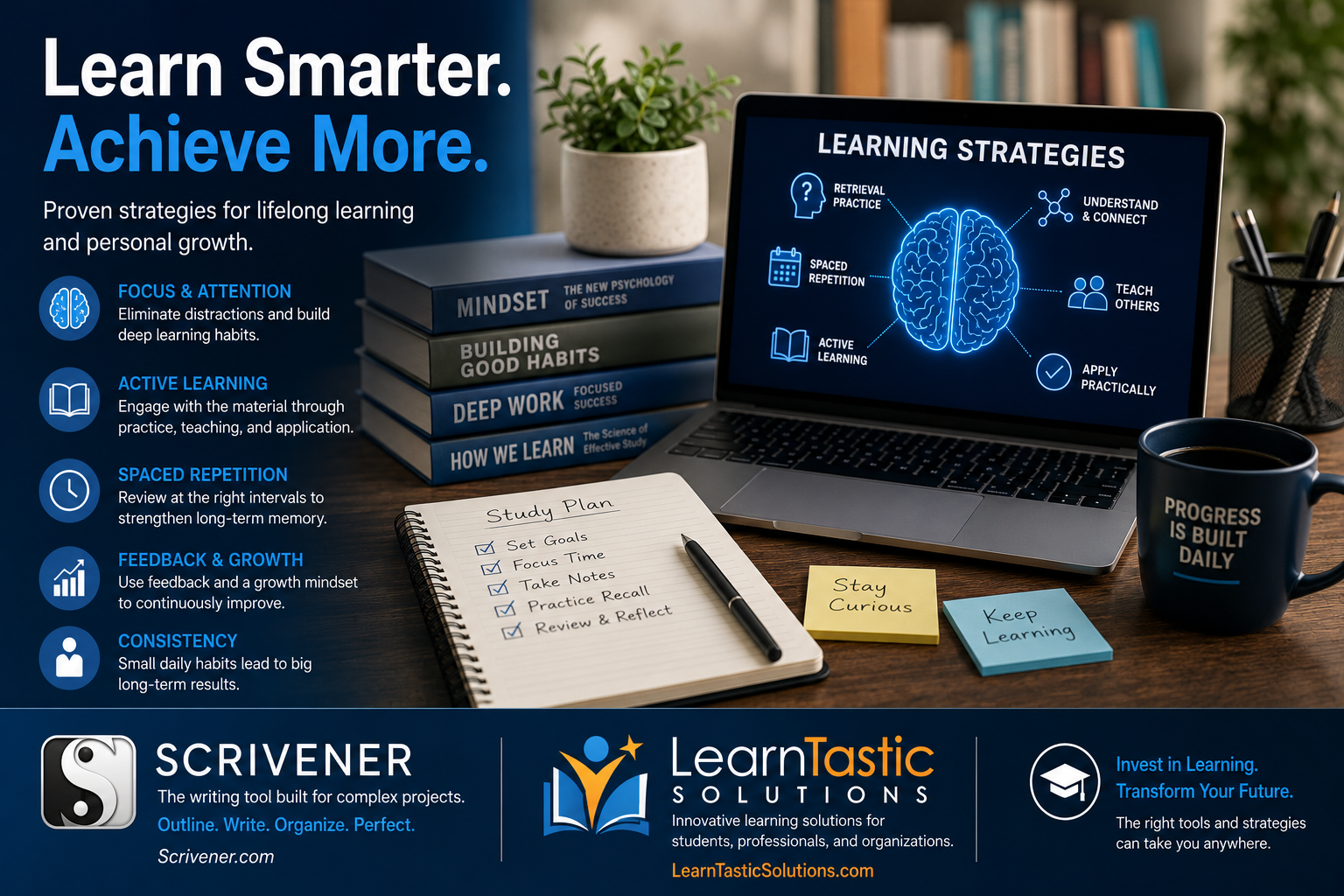
Every person learns differently. Some individuals absorb information quickly through visual examples, while others prefer listening to explanations, engaging in hands-on activities, or reading detailed instructions. Understanding learning styles can help students, educators, professionals, and lifelong learners improve communication, retention, and overall educational success.
The concept of learning styles suggests that people process and retain information in different ways based on their preferred methods of learning. Although researchers continue debating the scientific limitations of rigid learning style classifications, the broader idea remains valuable: individuals often benefit from varied teaching and learning approaches.
One commonly discussed framework identifies four major learning preferences: visual, auditory, reading and writing, and kinesthetic learning. Each style reflects different strengths in how people engage with information.
Visual learners tend to process information more effectively through images, diagrams, charts, graphs, videos, and demonstrations. They often benefit from color coding, mind maps, infographics, and visual organization techniques. Seeing relationships and patterns visually can improve understanding and memory retention.
Auditory learners typically absorb information best through listening. Lectures, discussions, podcasts, verbal repetition, and spoken explanations may help them learn more efficiently. These learners often remember tone, rhythm, and conversations particularly well.
Reading and writing learners prefer text-based information. They often enjoy taking notes, reading articles, creating lists, and reviewing written explanations. Traditional educational environments frequently favor this learning style through textbooks, essays, and written assignments.
Kinesthetic learners generally prefer hands-on experiences and physical engagement. Practical demonstrations, experiments, simulations, role-playing, and interactive activities help them connect with information more effectively. These learners often benefit from movement and real-world applications.
Understanding personal learning preferences can improve study habits significantly. For example, visual learners may benefit from drawing diagrams instead of rereading notes repeatedly. Auditory learners might record lectures or discuss concepts aloud. Kinesthetic learners may retain information better through hands-on practice rather than passive observation.
Educators can improve classroom engagement by incorporating multiple teaching methods instead of relying exclusively on lectures or written materials. Combining visuals, discussions, interactive activities, and reading assignments creates more inclusive learning environments that support diverse learners.
Technology has expanded opportunities for personalized learning. Online courses, educational apps, video tutorials, podcasts, and interactive simulations allow learners to choose formats that align with their preferences. Adaptive learning systems powered by artificial intelligence can further customize educational experiences.
Learning styles also influence workplace training and professional development. Employees often perform better when training materials are delivered through varied formats. Organizations that recognize diverse learning needs may improve employee retention, productivity, and engagement.
However, it is important to avoid oversimplifying learning styles into rigid categories. Most people use a combination of learning methods depending on the situation and subject matter. Someone may prefer visual learning for mathematics but auditory learning for language instruction.
Research also suggests that effective learning often involves using multiple senses and methods simultaneously. Combining reading, discussion, visual aids, and practice activities can strengthen memory and understanding more effectively than relying on a single approach.
Motivation, environment, emotional state, and prior knowledge also play major roles in learning success. A highly motivated learner may adapt successfully to different teaching styles even if the format is not their personal preference.
Another important consideration involves metacognition, the ability to understand how one learns best. Self-awareness helps learners identify strategies that improve concentration, comprehension, and retention. Developing strong study habits often matters more than strictly identifying a single learning style.
Collaborative learning environments can benefit diverse learners as well. Group discussions, peer teaching, projects, and teamwork expose individuals to different perspectives and communication methods. Explaining concepts to others can deepen understanding regardless of preferred learning style.
Parents can support children by observing how they naturally engage with information and adjusting learning activities accordingly. Some children may respond better to visual demonstrations, while others thrive through storytelling or hands-on exploration.
Educational systems are increasingly recognizing the importance of flexibility and differentiated instruction. Rather than expecting every student to learn identically, modern teaching approaches aim to accommodate varying strengths and needs.
Digital distractions present modern challenges for all learning styles. Attention spans may suffer when learners constantly multitask across devices and platforms. Developing focused study routines and minimizing distractions can improve retention and comprehension.
Learning styles are also relevant beyond formal education. Adults continue learning throughout life when developing hobbies, mastering technology, improving careers, or pursuing personal interests. Understanding how one learns most effectively can accelerate growth in many areas.
Critical thinking remains essential regardless of learning style. Memorization alone is rarely sufficient in modern education and workplaces. Learners must analyze information, solve problems, communicate ideas, and adapt to changing situations.
Perhaps the greatest value of understanding learning styles lies in promoting empathy and flexibility. Recognizing that people process information differently encourages patience, better communication, and more inclusive educational experiences.
Ultimately, successful learning depends on more than labels or categories. Curiosity, consistency, practice, engagement, and adaptability all contribute significantly to growth and understanding. Learning styles provide helpful insight into personal preferences, but the most effective learners remain open to experimenting with different approaches.
As education and technology continue evolving, personalized learning opportunities will likely expand further. By understanding diverse learning methods and remaining adaptable, individuals can build stronger skills, improve confidence, and become more effective lifelong learners.