
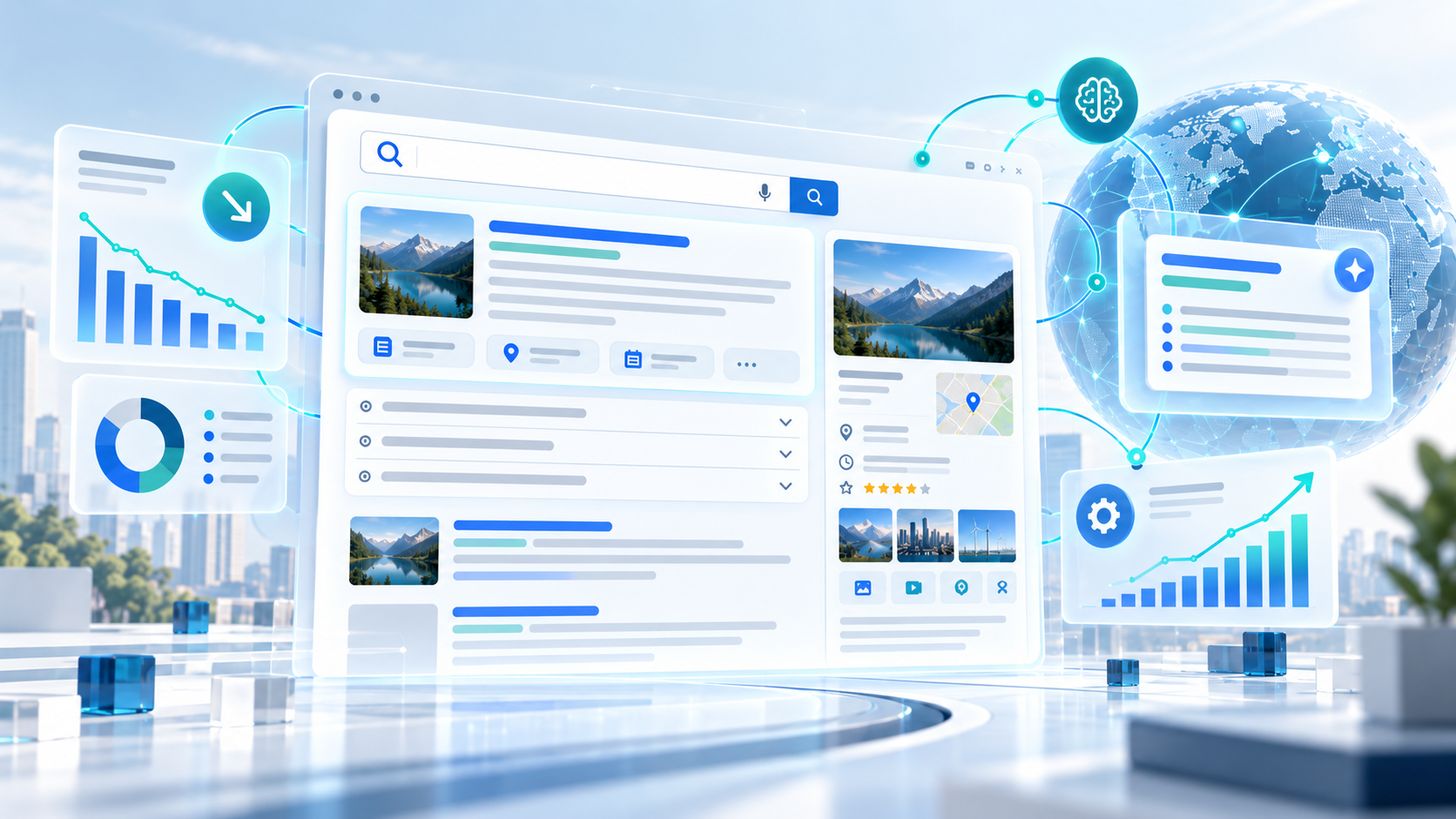
For years, digital marketing trained teams to treat the click as the proof that search worked. Rank a page, earn the click, send the visitor to the site, and measure what happened next.
That sequence still matters, but it is no longer the only path. Search engines increasingly answer questions directly. AI Overviews summarize information. AI Mode supports follow-up conversations. Local packs, product listings, video results, knowledge features and social content can influence decisions without producing an immediate website visit.
Zero-click search does not mean search marketing is dead. It means brands need to optimize for both qualified visits and pre-click influence, then measure visibility, branded demand, direct traffic, assisted conversions and revenue rather than relying on organic clicks alone.
What zero-click really means
Zero-click does not mean the user received no value from your brand. It means the search session did not produce a conventional click to your site at that moment.
A user may see your company cited in an AI answer, read your business details in a local result, watch your video, save your brand name, search for you later, type your URL directly, subscribe elsewhere or mention your company in a buying conversation. Those effects are harder to measure than a click, but they are real parts of modern discovery.
AI search is expanding the top of the funnel
Google reports that AI Mode has surpassed one billion monthly users and that AI-driven search experiences are encouraging people to ask more complex questions. This matters because complex questions often happen earlier in the decision process.
Someone who once searched "best CRM" may now ask, "What is the best lightweight CRM for a two-person marketing agency that wants self-hosted data, email follow-ups and no mandatory AI subscription?" The result may be a generated comparison rather than a list of ten blue links.
Your brand can influence that comparison if your content is specific enough and your product information is clear enough, even if the user does not click immediately.
Stop treating every search impression as a failed click
Traditional click-through rate remains useful, but it should be interpreted in context. If impressions rise sharply because a brand begins appearing in AI features, a lower click-through rate may not automatically mean the strategy failed.
The more useful question is whether the new visibility is producing downstream effects:
- more branded searches;
- more direct visits;
- more returning visitors;
- more email signups;
- more referral mentions;
- more sales conversations where prospects already know the brand;
- more assisted conversions.
Create content that is valuable before the click
If a page only works when a person reads all 2,000 words, it is poorly designed for a search environment that often extracts pieces of information. The page should communicate value at several depths.
Use a clear title, a direct opening answer, descriptive headings, useful comparison tables, strong images and original examples. The short answer should be accurate enough to stand on its own, while the full page provides the reasoning, evidence and implementation detail that makes the click worthwhile.
Give people a reason to remember the source
In a zero-click environment, brand recognition becomes more important. Generic articles disappear into the answer. Distinctive frameworks, named methodologies, original data and memorable points of view are easier to associate with a source.
Instead of publishing "10 SEO Tips," publish something your organization can own: an annual benchmark, a field study, a documented restoration process, a named scorecard, a calculator or a case study that shows what happened before and after the work.
Own the branded next step
If users encounter your brand before they visit the site, make the later journey easy. Your business name should be consistent. Your domain should be memorable. Your About page, contact information, product pages and social profiles should clearly confirm that the user found the right company.
This is where entity consistency and brand architecture matter. The easier it is for a person and a machine to connect your name, website, product and expertise, the more useful pre-click visibility becomes.
Use search features that can create direct action
Zero-click is not always zero-conversion. Local listings can produce calls and directions. Product experiences can create purchase intent. Video results can generate subscribers. Preferred Sources can increase the prominence of selected publishers in Google surfaces. AI results can introduce users to a brand and provide links when they want to explore further.
Optimize the full search presence, not just article rankings.
Measure zero-click influence with a broader dashboard
A practical dashboard should combine:
- Search Console impressions and clicks;
- generative AI visibility where available;
- branded-query growth;
- direct traffic;
- returning visitors;
- newsletter signups;
- lead-source notes from sales conversations;
- assisted conversions;
- revenue influenced by organic discovery.
Google's dedicated generative AI performance reporting makes this easier for its own search ecosystem, but cross-platform measurement still requires a combination of analytics, referral data and disciplined lead-source tracking.
Do not abandon the click
The correct response to zero-click search is not to stop optimizing for traffic. A qualified website visit remains valuable because the site is where you control the experience, gather consented first-party data, explain complex offers and convert interest into a relationship.
The better goal is to earn the click when the click is useful, while also earning recognition and trust when the answer happens elsewhere.
A practical zero-click content strategy
- Answer the main question clearly enough to be useful in search.
- Add proprietary depth that makes the full page worth visiting.
- Use memorable branding and identifiable expertise.
- Strengthen local, product, video and image visibility where relevant.
- Create conversion paths for direct and returning visitors.
- Track branded demand and assisted outcomes.
- Update high-impression pages that are visible but not persuasive.
Design for the two-stage decision
Many search journeys now have two distinct stages. The first is recognition: the user learns that a company, product or idea exists. The second is verification: the user later searches the brand, compares alternatives or visits the website directly.
Content should support both stages. During recognition, the message needs to be clear enough that the brand and idea are memorable. During verification, the website needs authoritative pages that confirm the promise, explain the offer and make the next step obvious.
This is why weak About pages, vague service pages and inconsistent naming can waste zero-click visibility. The user remembers the name, searches later and then encounters a website that does not clearly confirm what the company does.
Use branded content assets that travel well
Frameworks, checklists, calculators, named processes and annual reports can travel beyond the site while retaining a connection to the source. A generic tip is easy to detach from the brand. A distinctive framework is easier to remember and attribute.
This does not require inventing a trademarked name for every idea. It means packaging genuine expertise in a form people can recognize and reuse.
Improve the post-search conversion path
When a user finally reaches the website, do not assume they are at the beginning of the journey. They may already know the basics from an AI answer or video. Give them fast access to deeper information: pricing factors, process, evidence, examples, comparisons and contact options.
Landing pages should be written for informed prospects as well as beginners. A user who already understands the category should not have to scroll through a long introductory explanation before seeing what makes the company different.
Ask sales teams what prospects already know
One of the best ways to measure pre-click influence is qualitative. Ask the people handling sales calls what prospects mention. Are they referencing an article? Saying "I saw you recommended"? Asking about a comparison they encountered elsewhere? Arriving with a surprisingly accurate understanding of the service?
Add a simple lead-source note to the CRM. Over time, patterns will reveal channels and topics that analytics alone cannot fully attribute.
Do not confuse zero-click visibility with permission to stop creating websites
Owned websites remain critical because they provide the authoritative version of your information and a place to build a direct relationship. Search platforms can change presentation rules, attribution and interfaces at any time. Your website, email list and first-party data reduce that dependency.
The objective is not to surrender the customer journey to search engines. It is to use search visibility to bring qualified people into channels the business can sustain.
Final takeaway
The click is no longer the only moment that matters. Search can introduce a brand, validate an expert, answer a question and shape a buying decision before the user ever reaches a website. Marketers who measure only sessions will miss part of the value. Marketers who optimize only for impressions will miss the sale.
The winning strategy is to build content that works both before and after the click.
Are your high-impression pages actually producing business value?
Restored Content can identify aging pages, weak answer structures, missed internal links and conversion gaps that prevent existing search visibility from turning into authority, traffic and leads.
Request a Content and Search Visibility Audit at RestoredContent.com